| ID | 70189 |
| フルテキストURL | |
| 著者 |
Yoshimura, Shinichi
Department of Neurosurgery, Hyogo Medical University
Sugiu, Kenji
Department of Neurological Surgery, Okayama University Graduate School of Medicine
ORCID
Kaken ID
publons
researchmap
Hirohata, Masaru
Department of Neurosurgery, Kurume Medical University
Enomoto, Yukiko
Department of Neurosurgery, Gifu University Graduate School of Medicine
Imamura, Hirotoshi
Department of Neurosurgery, National Cerebral and Cardiovascular Center
Tsuruta, Wataro
Department of Endovascular Neurosurgery, Toranomon Hospital
Fujinaka, Toshiyuki
Department of Neurosurgery, National Hospital Organization Osaka National Hospital
Hasegawa, Hitoshi
Department of Neurosurgery, Brain Research Institute, Niigata University
Higashi, Toshio
Department of Neurosurgery, Fukuoka University Chikushi Hospital
Izumi, Takashi
Department of Neurosurgery, Nagoya University of Graduate School of Medicine
Kiyosue, Hiro
Department of Diagnostic Radiology, Kumamoto University Faculty of Life Sciences
Matsumoto, Yasushi
Division of Development and Discovery of Interventional Therapy, Tohoku University Hospital
Oishi, Hidenori
Oishi Neurosurgery Clinic, and Department of Neurosurgery, The Jikei University School of Medicine
Satow, Tetsu
Department of Neurosurgery/Stroke Center, Kindai University Hospital
Tanaka, Michihiro
Department of Neurosurgery and Neuroendovascular Surgery, Kameda Neurocenter, Kameda Medical Center
Tsumoto, Tomoyuki
Department of Neurosurgery, Showa University Fujigaoka Hospital
Yamagami, Hiroshi
Division of Stroke Prevention and Treatment, Institute of Medicine, University of Tsukuba
Ishii, Akira
Department of Neurosurgery, Juntendo University Faculty of Medicine
Matsumaru, Yuji
Department of Neurosurgery, Institute of Medicine, University of Tsukuba
Miyachi, Shigeru
Department of Neurological Surgery, Aichi Medical Univeristy
|
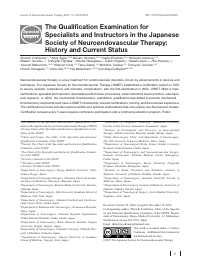
| 抄録 | Neuroendovascular therapy is a key treatment for cerebrovascular disorders, driven by advancements in devices and techniques. The Japanese Society for Neuroendovascular Therapy (JSNET) established a certification system in 1997 to ensure operator competence and minimize complications, with the first examination in 2002. JSNET offers 2 main certifications: specialist and instructor. Specialists perform basic procedures, while instructors lead in practice, education, and research. In 2020, the mechanical thrombectomy practitioner qualification was added to promote mechanical thrombectomy. Applicants must have a JSNET membership, relevant certifications, training, and documented experience. The certification process includes rigorous written and practical examinations that now employ non-fluoroscopic models. Certification renewal every 5 years requires conference participation and a continuing education program. Public awareness and integration into stroke center designations have grown. Over 2200 specialists, including more than 500 instructors, have been certified, significantly advancing neuroendovascular therapy in Japan. JSNET aims to continue improving certification and education to maintain high standards.
|
| キーワード | neuroendovascular therapy
specialist certification
Japanese Society for Neuroendovascular Therapy (JSNET)
mechanical thrombectomy
|
| 発行日 | 2025
|
| 出版物タイトル |
Journal of Neuroendovascular Therapy
|
| 巻 | 19巻
|
| 号 | 1号
|
| 出版者 | The Japanese Society for Neuroendovascular Therapy
|
| 開始ページ | sr.2024-0099
|
| ISSN | 1882-4072
|
| NCID | AA1229439X
|
| 資料タイプ |
学術雑誌論文
|
| 言語 |
英語
|
| OAI-PMH Set |
岡山大学
|
| 著作権者 | ©2025 The Japanese Society for Neuroendovascular Therapy
|
| 論文のバージョン | publisher
|
| PubMed ID | |
| DOI | |
| CRID | |
| Web of Science KeyUT | |
| 関連URL | isVersionOf https://doi.org/10.5797/jnet.sr.2024-0099
|
| ライセンス | https://creativecommons.org/licenses/by-nc/4.0/
|