| ID | 71203 |
| FullText URL | |
| Author |
Onishi, Hideki
Department of Gastroenterology and Hepatology, Medical Development Field, Okayama University
Toh, Norihisa
Department of Cardiovascular Medicine, Medical Development Field, Okayama University, Okayama, Japan
Kaken ID
researchmap
Baba, Kenji
Department of Pediatric Cardiology, Academic Fields of Medicine, Dentistry and Pharmaceutical Sciences, Okayama University
ORCID
Kaken ID
Kotani, Yasuhiro
Department of Cardiovascular Surgery, Academic Fields of Medicine, Dentistry and Pharmaceutical Sciences, Okayama University
Kasahara, Shingo
Department of Cardiovascular Surgery, Academic Fields of Medicine, Dentistry and Pharmaceutical Sciences, Okayama University
Kaken ID
publons
Otsuka, Motoyuki
Department of Gastroenterology and Hepatology, Academic Fields of Medicine, Dentistry and Pharmaceutical Sciences, Okayama University
|
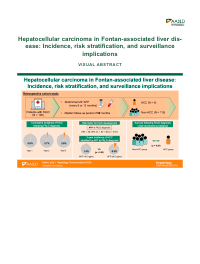
| Abstract | Background: Hepatocellular carcinoma (HCC) is a serious complication of Fontan-associated liver disease (FALD). However, data on its incidence, risk factors, and outcomes in this rare population are limited. We aimed to assess the incidence and predictors of HCC and evaluate the utility of surveillance in patients with FALD.
Methods: We conducted a retrospective cohort study on patients with FALD who were referred to our gastroenterology department. The cumulative incidence of HCC after FALD diagnosis was calculated, and multivariate analysis was used to identify independent risk factors. Overall survival after FALD diagnosis was compared between patients who developed HCC and those who did not. Results: A total of 120 patients with FALD were followed up for a median period of 50.0 months. The cumulative incidence rates of HCC at 1, 2, and 3 years after FALD diagnosis were 0.9%, 2.7%, and 3.9%, respectively. Elevated alpha-fetoprotein (AFP) at FALD diagnosis was independently associated with HCC development (hazard ratio, 1.29; 95% confidence interval, 1.04–1.60; p=0.01). There was no significant difference in overall survival between patients with and without HCC in this cohort (log-rank test, p=0.50). Conclusions: Patients with FALD face a non-negligible risk of developing HCC, thus supporting the need for surveillance. Elevated AFP levels at the time of FALD diagnosis may aid in risk stratification, which enables the targeted monitoring and early detection of HCC. Furthermore, routine surveillance contributes to the excellent prognosis of patients with FALD who develop HCC, thus making their prognosis comparable to that of patients without HCC. |
| Keywords | alpha-fetoprotein
FALD
Fontan procedure
retrospective cohort study
risk stratification
|
| Published Date | 2026-02-26
|
| Publication Title |
Hepatology Communications
|
| Volume | volume10
|
| Issue | issue3
|
| Publisher | Ovid Technologies (Wolters Kluwer Health)
|
| Start Page | e0910
|
| ISSN | 2471-254X
|
| Content Type |
Journal Article
|
| language |
English
|
| OAI-PMH Set |
岡山大学
|
| Copyright Holders | © 2026 The Author(s).
|
| File Version | publisher
|
| PubMed ID | |
| DOI | |
| Web of Science KeyUT | |
| Related Url | isVersionOf https://doi.org/10.1097/hc9.0000000000000910
|
| License | http://creativecommons.org/licenses/by-nc-nd/4.0/
|
| Citation | Onishi, H., Toh, N., Baba, K., Kotani, Y., Kasahara, S., & Otsuka, M. (2026). Hepatocellular carcinoma in Fontan-associated liver disease: Incidence, risk stratification, and surveillance implicationsHepatology Communications, 10(3). https://doi.org/10.1097/HC9.0000000000000910
|